Volunteer in the new Caregiver Centre

[vc_row][vc_column width=”1/2″][vc_column_text]Cornwall Community Hospital opened a Family Caregiver Centre this Fall that aims to improve the experience of family caregivers in our health system. The mew centre is manned by volunteers who have lived experience as family caregivers. If you are a good listener and want help family caregivers connect with the many resources available in our Family Caregiver Centre, this opportunity may be a good fit for you.[/vc_column_text][vc_empty_space height=”12″][vc_column_text]

Apply today

[/vc_column_text][vc_empty_space height=”12″][vc_column_text]Applications are now being accepted for the position of Caregiver Centre Volunteer. To apply, simply fill out the Volunteer Application form and send it to judy.dancause@cornwallhospital.ca along with a resume (if available).

For additional information on these volunteer opportunities, please contact volunteer services at 613-938-4240, ext. 3519 or email judy.dancause@cornwallhospital.ca.[/vc_column_text][/vc_column][vc_column width=”1/2″][vc_single_image image=”7915″ img_size=”full”][/vc_column][/vc_row]

Advice for caregivers on schizophrenia

[vc_row][vc_column width=”2/3″][vc_column_text]Psychosis or psychotic episodes can be very difficult for caregivers to know how to handle in just the right way. This article offers family caregivers some practical approaches and tips, “Helping Someone with Schizophrenia: Overcoming Challenges While Taking Care of Yourself.”[/vc_column_text][/vc_column][vc_column width=”1/3″][vc_single_image image=”6278″ img_size=”full”][/vc_column][/vc_row]

Motivating substance users with family support

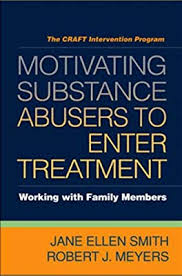
[vc_row][vc_column width=”2/3″][vc_column_text]This acclaimed book, “Motivating Substance Abusers to Enter Treatment: Working with Family Members,” presents the Community Reinforcement and Family Training (CRAFT) model of addiction recovery.

This time- and cost-effective therapy program is designed to engage family caregivers who want to motivate a loved one to seek help for a substance use problem.

The authors’ non-confrontational approach teaches concerned significant others (CSOs) how to change their own behavior in order to reward sobriety, discourage substance use, and ultimately help get the substance abuser into treatment.[/vc_column_text][/vc_column][vc_column width=”1/3″][vc_single_image image=”6269″ img_size=”full” onclick=”img_link_large” img_link_target=”_blank”][/vc_column][/vc_row]

Resilience & You

[vc_row][vc_column width=”2/3″][vc_column_text]Resilience is the ability to weather stress and overcome obstacles. This resource explains how people tend to bounce back after bad news, and offers advice that can help family caregivers improve their ability to keep things on a more even keel.[/vc_column_text][/vc_column][vc_column width=”1/3″][vc_single_image image=”4528″ img_size=”full”][/vc_column][/vc_row]

Transition from hospital to home

[vc_row][vc_column][vc_column_text]

Hospital discharge planning advice for caregivers:

[/vc_column_text][vc_empty_space height=”16″][/vc_column][/vc_row][vc_row][vc_column width=”2/3″][vc_column_text]Patient discharge from the hospital and the transition back to the community is a very significant step for both the patient and the family caregiver. The recovery of your loved one is enhanced by a good discharge plan. Unfortunately, hospitals often struggle with effective discharge planning, so it is important that caregivers be prepared.[/vc_column_text][vc_empty_space height=”16″][vc_column_text]

Helpful tips

  • Try to get an estimated date of discharge as soon as possible so that you can prepare to be available for pick up; consider your job and transportation needs; do you have enough time to get everything ready at home?
  • If you do not feel ready or safe to have your loved one home, be sure to communicate with the nursing staff or department manager
  • Ensure that you have a good relationship with your pharmacist; you can make an appointment to review any new medications for your loved one; after a hospitalization for mental illness or substance use, medications often change and sometimes at the last minute, so this is an essential relationship to cultivate; talk to the pharmacy about using blister packs (medication can be organized by pharmacy staff and packaged in daily doses), making it much easier for the patient and caregiver to monitor adherence to the prescribed therapy
  • Encourage the doctor to fax prescriptions to your pharmacy a few days before the discharge date so that you can pick up the medications and have it at home before you arrive
  • Encourage the doctor to fax any important medical information to your loved one’s family doctor; if your loved one does not have a family doctor, start getting on lists now because it is very important to have a medical professional on your team
  • Does your home environment need to change; do you need a bath chair shower grip, or locking medicine cupboard?
  • Speak with the nursing staff so you know what kind of help/care your loved one requires once discharged
  • Ask questions about the autonomy of your loved one; can they stay alone during the day, can they cook, use appliances, go out for walk alone?
  • What follow up appointments are booked and are they local?
  • If you are working and cannot provide transportation, ask about community agencies that may provide transportation to medical appointments for free or for a nominal fee
  • Ask about community programs for your loved one
  • Ask about support groups for caregivers and other resources for you
  • Ask who you can call if you get home and you have a question
  • Always keep a running list of questions with you; when you visit your loved at the hospital, many of your questions will get answered along the way, but new ones will also come up
  • When appropriate, you can ask for a family meeting with all of the professionals involved in your loved one’s care
  • On the day of discharge, you should be given a discharge summary or package; this information should have been faxed to your family doctor and/or psychiatrist, but bring it to the first follow up appointment, just in case so that they can make a copy for your loved one’s medical file
  • Ask questions; demonstrate that you have a knowledgeable role on the treatment team; although there is considerable evidence supporting including caregivers in treatment planning, some individuals/institutions are slower to make this transition; you will need to advocate for your loved one and may need to be assertive
  • Ask for a peer-support appointment if you are finding your caregiver responsibilities stressful; ask for support, encouragement and help navigating your caregiver journey

[/vc_column_text][vc_empty_space height=”16″][/vc_column][vc_column width=”1/3″][vc_single_image image=”3977″ img_size=”full”][/vc_column][/vc_row][vc_row][vc_column][vc_column_text]

Further recommended reading

Be Prepared To Go Home Checklist
Hospital Discharge Planning: A guide for Families and Caregivers[/vc_column_text][/vc_column][/vc_row]

Setting healthy boundaries

[vc_row][vc_column width=”2/3″][vc_column_text]There are a number of boundaries to think about when you are a family caregiver. Some boundaries need to be set for yourself, some for your loved one, and others for your family.

Only you can know what the boundaries should be … and if you can carry through with the consequences that you set for crossing the boundaries.[/vc_column_text][vc_empty_space height=”16″][vc_column_text]

Where to begin

[/vc_column_text][vc_empty_space height=”16″][vc_column_text]Has helping your loved one created a pattern of unhealthy rescuing? Do your conversations about your loved one’s thoughts, feelings or behaviour spiral into bursts of anger of despair? There are good places to begin looking for boundaries that are healthy for you and respectful of others in your household.

Once you have established a firm boundary and it starts to free up your emotional energy and time, you will wish that you started sooner. That’s the good news.

The bad news is that setting boundaries is going to take some real thought and effort on your part. To help you get started, here are some helpful articles:

[/vc_column_text][/vc_column][/vc_row][vc_row][vc_column][/vc_column][/vc_row][vc_row][vc_column][/vc_column][/vc_row]

Advice on giving advice

[vc_row][vc_column][vc_column_text]One of the thinnest tightropes that family caregivers navigate is encouraging a loved one to seek mental health treatment. The stakes are high, the subject is touchy, and years of stressful family dynamics inevitably come into play.

In this podcast, “Savvy Psychologist” Dr. Ellen Hendriksen gets some great advice from mental health advocate Gabe Howard about the family member’s role in a loved one’s mental health recovery.[/vc_column_text][/vc_column][/vc_row]

Why use validating statements?

[vc_row][vc_column width=”2/3″][vc_empty_space height=”16″][vc_column_text]Validation is a valuable tool in the family caregiver’s repertoire. Imagine being on the receiving end of a constant stream of negative statements. Then imagine what it feels like to hear, “I appreciate how hard this is for you. I can see that you are really trying.”

It doesn’t take long to figure out that validating statements can go a long way to supporting a loved one through difficult times.

Emotional validation is the process of learning about, understanding and expressing acceptance of another person’s emotional experience.

According to Psychology Today, “Learning how to use validation effectively takes practice.” It is also important to understand that validation does not have to mean that we agree with our loved one. Think of this skill instead as a way to recognize and understand your loved one’s thoughts, feelings, sensations and behaviours.”[/vc_column_text][vc_empty_space height=”16″][vc_column_text]

Examples of validating statements

[/vc_column_text][vc_empty_space height=”16″][vc_column_text]

  • I can see that you are very (upset, sad, frightened, scared).
  • Here’s what I’m hearing you say. (summarize with fact checking)
  • I guess that must have been hard for you.
  • I can see you are making an effort.
  • I can see how hard you are working.
  • Wow, that/she/he must have made you feel really angry/sad.
  • I can see this is important to you.
  • What a frustrating situation to be in!
  • It must make you feel horrible to have someone do that.
  • That’s got to be so (difficult, upsetting, frustrating, etc.) for you.
  • Wow, how hard that must be.
  • That really stinks!
  • That’s messed up! (or stronger language if you are so inclined)
  • How frustrating!
  • Yeah, I can see how that might make you feel really sad.
  • It makes sense you would be so upset about that.
  • What a horrible feeling that must be.
  • What a tough spot.
  • It sounds like you feel that’s really unfair and you shouldn’t be asked to do that.
  • That must be really discouraging.
  • I bet you feel disappointed.
  • Darn, I know how much that meant to you.
  • Tell me more. (shows interest)
  • I would be (upset, nervous, sad, scared, frightened) too!!
  • I can see you’re overwhelmed. Let me help you with that. Can we talk?
  • I know you’re scared. It’s going to be hard… and I know you will figure it out.
  • That must have been very upsetting for you.
  • I’m thinking this must have been (upsetting, sad, frightening, scary) for you.
  • I’m thinking you must have been (upset, sad, frightened, scared, etc.)
  • I would have been (upset, sad, frightened, scared, etc.) too. (self-disclosure)
  • Of course… me too! I would have felt the same way. (self-disclosure)
  • I don’t have the same beliefs as you but I can see this is important to you.
  • We are both feeling sad… we are suffering together.
  • Your suffering is my suffering (because I love you).
  • Fair enough.
  • You may be right!

Learn more: Understanding Validation: A Way to Communicate Acceptance.[/vc_column_text][vc_empty_space height=”16″][/vc_column][vc_column width=”1/3″][vc_single_image image=”2902″ img_size=”full”][/vc_column][/vc_row][vc_row][vc_column width=”2/3″][vc_empty_space height=”16″][/vc_column][/vc_row][vc_row][vc_column width=”2/3″][vc_empty_space height=”16″][/vc_column][/vc_row]

Questions about patient privacy & consent?

[vc_row][vc_column width=”2/3″][vc_column_text]When the problem is addiction or mental health, questions about the patient’s ability to make healthcare decisions is bound to come up. This is where Ontario’s privacy and consent rules come into play.

Unfortunately, the rules can be complicated and open to interpretation but it is well worth the effort to get to know the rules of engagement.

If you want to understand when and why family caregivers and health providers can and cannot share information about the patient, Questions & Answers on Patient Privacy and Consent in The Addiction and Mental Health System in Ontario has the answers. This Q&A document presents the answers to common questions. It also gives health providers and family caregivers the insight they need to get the most out of their interactions while working within the rules.[/vc_column_text][vc_empty_space height=”24″][/vc_column][vc_column width=”1/3″][vc_single_image image=”2924″ img_size=”full”][/vc_column][/vc_row][vc_row][vc_column width=”1/3″][vc_single_image image=”3062″ img_size=”full”][/vc_column][vc_column width=”2/3″][vc_column_text]Further reading on this subject is available from The Change Foundation that will:

  • Explain the legal framework that applies to caregivers and providers under Ontario’s health privacy legislation, the Personal Health Information Protection Act, 2004
  • Explain the consent requirements outlined in the Health Care Consent Act, 1996
  • Summarize what caregivers need to know about the legal framework to get the information they are entitled to and to support patients
  • Summarize providers’ legal responsibilities about patient consent and the disclosure of information to family caregivers
  • Clarify common myths and misunderstandings about how to apply privacy and consent legislation in the addiction and mental health system

Community based mental health and addiction providers will find this Addictions and Mental Health Ontario toolkit helpful. It includes templates for health providers to use in practice and offers scenario-based questions and answers to help illustrate how to apply the legislation.

The Information and Privacy Commission of Ontario provides the public with a right of access to government-held information and access to their own personal information, while ensuring that any personal information held by public institutions and health care providers will remain private and secure. To guide Ontarians and custodians in understanding their respective privacy rights and obligations, see Frequently Asked Questions, Personal Health Information Protection Act.[/vc_column_text][/vc_column][/vc_row]

Caring for a child or young adult

[vc_row][vc_column width=”2/3″][vc_column_text]When your loved one is a child, youth or young adult, the role of the family caregiver will naturally be pretty hands-on.

There can be an upside to this involvement because health system providers will often seek out information from these family caregivers, and provide some direction on what they can do to help the young person who is struggling with addiction or mental illness. Family caregivers should probably take advantage of whatever access they have to their young loved one and capitalize on their opportunities to guide the young person into appropriate care. It may help to think of yourself as an ally to your loved one and not someone with an opposing point of view or a hidden agenda.

There are also limits to what a parent, guardian or caring friend can do, especially when it comes to determining whether or not your loved gets admitted to the health care system for the support that you feel they need. This is because Ontario’s addiction and mental health system is designed to respond to the wishes of the young person (not the demands of the family caregiver).

Under the law, a person of any age has the right to deny medical treatment so long as, in the opinion of the attending health care professional, the individual is not posing an imminent threat of physical violence to themselves or another person, and can demonstrate that they understand the possible consequences of declining a recommended course of care. Learn more about Ontario’s legal framework in Questions & Answers on Patient Privacy and Consent in the Addiction and Mental Health System in Ontario.

For tips on how caregivers of children can stay strong, see Mental Health Caregiver Guide: A Guide for Caregivers of Persons Living with Mental Illness or Experiencing Mental Health Challenges (p. 39).[/vc_column_text][/vc_column][vc_column width=”1/3″][vc_single_image image=”2833″ img_size=”full”][/vc_column][/vc_row]